Product · New
Last month we gave you a full visual designer for your documents. This month the same engine learned to read and render Chinese, Japanese, and Korean text correctly, right where it matters most: on the PDF your customer receives, and on the e-Invoice you submit to LHDN.
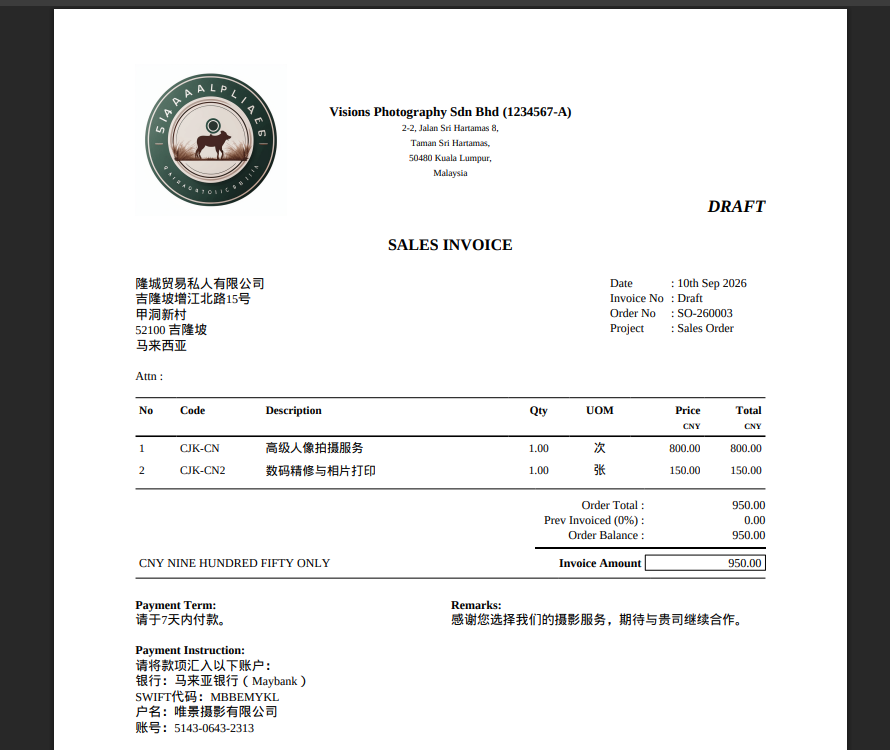
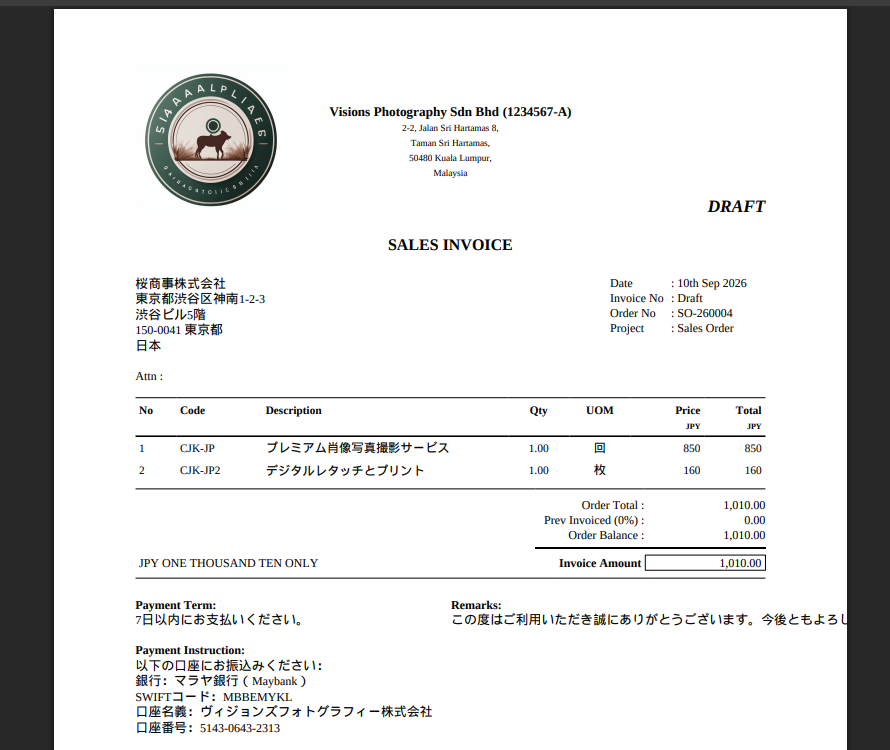
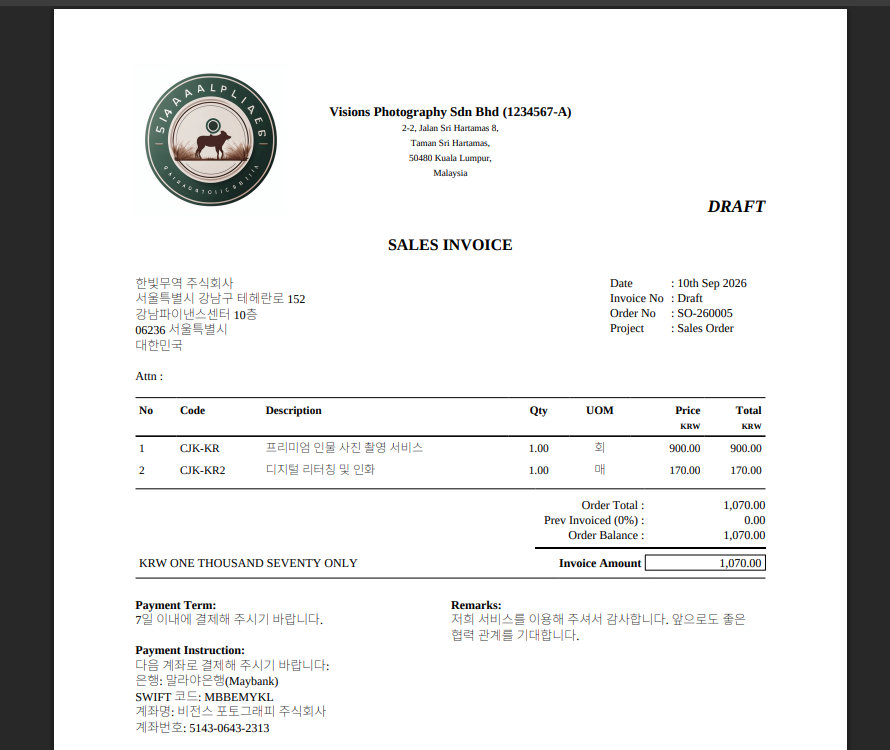
The same invoice template, fully localised: address, line items, unit of measure, payment terms, and bank instructions each in the customer’s own script
A name is not always in the Latin alphabet
A large part of doing business in Malaysia means trading with Chinese-Malaysian customers and vendors, and increasingly with partners across China, Taiwan, Hong Kong, Japan, Korea, and Singapore. Company names, contact names, and billing addresses often carry Chinese, Japanese, or Korean characters, not a romanised substitute. Software that only renders correctly in English or Bahasa Malaysia quietly fails these businesses at the exact moment it matters: the invoice they hand over, or the filing they submit.
Documents render CJK characters correctly, not as boxes or broken text
Cloudby’s document templates now render Chinese, Japanese, and Korean characters correctly wherever they appear on a PDF, instead of missing glyphs or placeholder characters. Whether it is a customer name on a sales invoice, a vendor name on a purchase order, or a note field on a delivery order, the character set your business actually uses now shows up the way it is meant to — kanji and kana together on a Japanese document, Hangul on a Korean one, Hanzi on a Chinese one.
e-Invoice address validation now understands it too
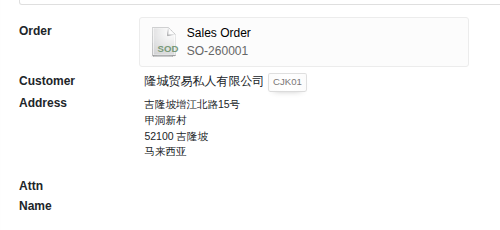
MyInvois requires a validated, structured address on every e-Invoice you submit. Cloudby’s postal address validator now correctly measures addresses written in Chinese, Japanese, or Korean script instead of undercounting them, so a business with a CJK-language customer or vendor address is not wrongly blocked from submitting a clean, compliant e-Invoice. This closes a real gap, not a cosmetic one: an address the validator miscounts and rejects is an e-Invoice you cannot submit.
Available now
Chinese, Japanese, and Korean document rendering and e-Invoice address validation are live today for every Cloudby workspace, no setup required.
Learn more
For document design, see the how-to guide for Document templates, or the reference on Templates. For e-Invoice, see e-Invoice setup or the e-Invoice / MyInvois guide.